
How to choose a high speed rotary joints
How to choose a high-speed rotary joint
Structural characteristics of high-speed rotary joints: corrosion-resistant materials, special design that does not damage the joint even under limited conditions, sealed rolling bearings do not require lubrication for life, balanced sealing load and wear are reduced to a minimum, reducing torque, sealing materials have self-lubricating properties, and spring components are located on the outside of the fluid channel, thus reducing pressure loss, avoiding particle retention in the medium, and overall improving fluid quality.
Hydraulic high-speed pneumatic rotary joint is suitable for flexible applications in water, hot oil, and steam
Stainless steel outer tube is corrosion-resistant and has a longer service life
Complete and uniform flow design with minimal pressure loss
Two precision imported bearings support to ensure long-term trouble free operation
The balanced mechanical seal design reduces the wear of the sealing surface caused by the sealing load, greatly extending the service life
Select materials for the sealing mating surface according to customer needs
The external pipe has threads or quick change flange connection method, which has strong installation flexibility
The shell is equipped with oil injection nozzles for reasonable maintenance of bearings, extending their service life
The shell is equipped with observation holes to observe leakage and wear conditions for timely maintenance measures
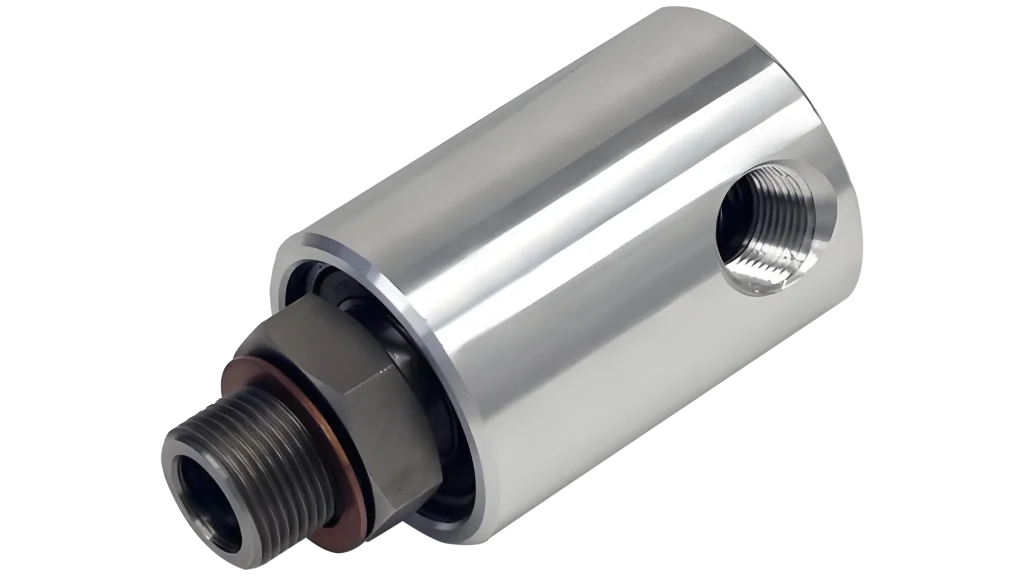
how to choose high speed rotary joints
High speed rotary joints help transfer media between stationary piping and rotating equipment without interrupting motion. Choosing the right model affects uptime, seal life, heat control, and maintenance access, especially when your application runs at elevated RPM. This page helps you evaluate the product details that matter before you request a quote or specify a replacement.
Which high speed rotary joint is right for your application?
The right high speed rotary joint is the one matched to your media, speed, pressure, temperature, shaft layout, and duty cycle. A joint that looks similar on the outside can perform very differently if the seal material, bearing support, connection style, or flow path is wrong for the equipment. Start with the operating conditions, then narrow the choice by installation space and maintenance expectations.
Useful details to gather before selection include:
- Rotational speed: Note normal operating RPM and any peak speed during startup, testing, or process changes.
- Media type: Identify whether the joint will carry air, water, coolant, hydraulic oil, steam, gas, or another process fluid.
- Pressure and temperature range: Include both steady operating values and short-term spikes.
- Flow direction and passage count: Confirm whether the application needs single-flow, dual-flow, or multi-passage transfer.
- Mounting orientation: Check shaft connection, thread type, hose clearance, and whether side or axial ports are required.
- Maintenance access: Consider how quickly seals, hoses, or the complete unit can be inspected or replaced.
-
Key product features to compare
When reviewing high speed rotary joints, focus on features that directly affect performance rather than appearance alone. The most useful product specifications are the ones that help you avoid leakage, premature wear, and installation problems.
Look for options such as:
- Balanced seal designs that support stable operation at higher rotational speeds.
- Bearing arrangements suited to the expected load and shaft behavior.
- Seal materials compatible with the media and temperature range.
- Corrosion-resistant body materials when fluids or environments require it.
- Compact housings for tight machinery spaces.
- Connection styles that match existing equipment and reduce adapter complexity.
- Drain, vent, or leakage management features where the process requires them.
Pricing depends on configuration
High speed rotary joint pricing usually depends on size, material, seal package, speed rating, pressure rating, passage configuration, and order quantity. A standard replacement may be straightforward, while a demanding custom setup may require application review before pricing is confirmed. Instead of guessing, share your operating data so the recommended option and quote reflect the real conditions.