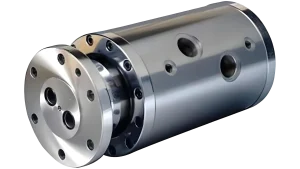
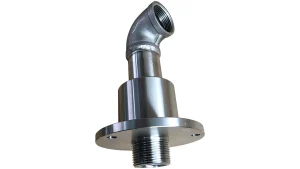
QR type thermal oil rotary joints
The QR type heat transfer oil rotary joint is an efficient and reliable fluid connection device designed specifically for transmitting heat transfer oil in high-temperature environments. It is widely used in industries such as chemical, plastic processing, textile printing and dyeing, especially in processes that require precise temperature control and continuous operation. This article will provide a detailed introduction to the working principle, sealing structure characteristics, and advantages of QR type thermal oil rotary joints in practical applications
- Operating Temperature350℃
- work pressure3.5MPa
- maximum speed500rpm
QR type thermal oil rotary joints
QR type thermal oil rotary joint, QR type thermal oil rotary joints, QR type thermal oil rotary union, QR type thermal oil rotary unions, QR type thermal oil swivel union, QR type thermal oil swivel unions, QR type thermal oil swivel joint, QR type thermal oil swivel joints
QR Type Thermal Oil Rotary Joints
QR type thermal oil rotary joints are sealed swivel devices that transfer heat-transfer oil between a stationary supply line and a rotating cylinder. Found in paper dryers, plastic calenders, rubber mixers, textile finishing machines, and laminated board lines, they keep rolls heated evenly so a process runs at a steady temperature without interruption. A well-built rotary joint prevents leaks, withstands thermal expansion, and holds up under continuous 24/7 operation, which is why engineers treat this component as a wear-critical part of any heated-roll system.
Because these parts sit at the center of a critical heating loop, the manufacturer you choose has a direct impact on downtime, energy costs, and workplace safety. A cheaply made unit can leak hot oil, damage bearings, or fail mid-run and force an entire production line to stop. In this guide we outline the key selection criteria and then profile nine trusted manufacturers recognized for engineering quality, reliable sealing, and dependable after-sales support.
These components are essential across a broad range of industries. Paper mills rely on them to heat dryer cylinders that remove moisture from the sheet; plastics and rubber processors use them on calender rolls to control product thickness and finish; and textile finishing lines depend on them for consistent dyeing and drying temperatures. In every case, the rotary joint must handle continuous rotation, high temperature, and thermal expansion while maintaining a leak-free seal, which is why choosing the right supplier matters as much as choosing the right model. Given how central these units are to steady production, the selection process deserves the same careful attention as the machinery itself, and the wrong choice can quietly erode both uptime and profit.
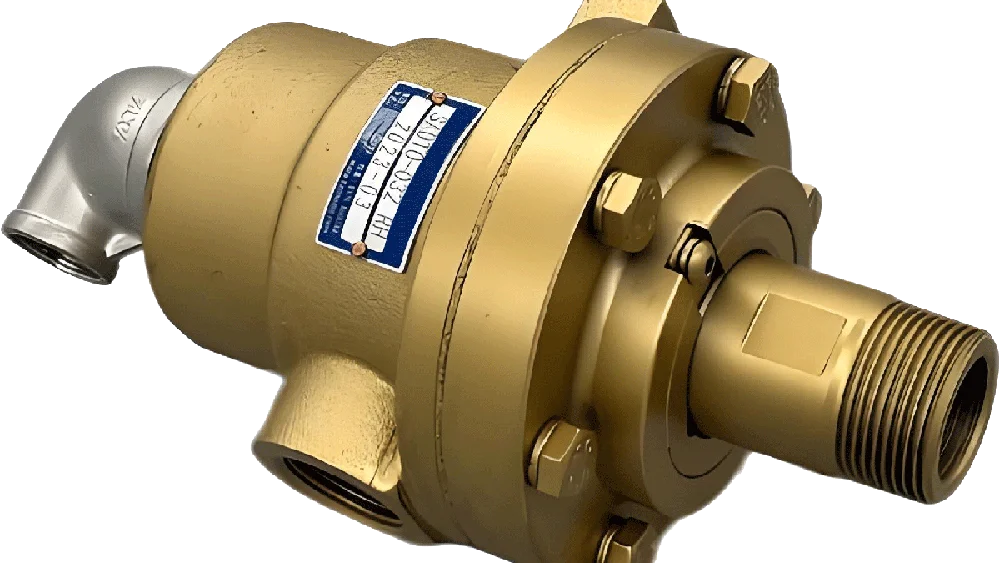
How a Thermal Oil Rotary Joint Works
At its core, a rotary joint is a mechanical seal that bridges a stationary pipe and a spinning roll. Hot thermal oil enters through a fixed inlet, passes through the rotating member, and travels into the roll’s internal channels, where it transfers heat to the roll surface. The oil then returns through the joint to the heater for re-circulation. Two features make this possible: a precision bearing that supports the rotating member, and a spring-loaded or pressure-assisted seal that keeps the hot oil contained even as the roll turns and expands with heat. The result is a closed heating loop that runs continuously without leaks, which is why seal design and material quality are the two most important factors in a long service life.
Thermal oil offers one key advantage over steam: it reaches much higher temperatures at relatively low pressure. Steam systems need very high pressure to exceed 200°C, which places heavy demands on the entire piping loop, whereas a thermal oil system delivers 250°C to 350°C at atmospheric or only modest pressure. That is why hot oil is the preferred medium for calenders, laminators, and dryers that require precise, high-temperature control. It also means the joint must be matched specifically to oil, because seals and materials chosen for steam may not survive prolonged contact with hot oil at these elevated temperatures.
Key Selection Criteria for a Reliable Manufacturer
Material and construction quality. Look for carbon steel or stainless steel bodies, hardened seal faces, and precision-machined rotors. High-grade materials resist wear, corrosion, and thermal fatigue over years of continuous service, and they hold their tolerances far longer than soft or undersized castings, so quality here pays for itself over the life of the machine.
Temperature and pressure ratings. Thermal oil systems commonly operate from 200°C to 350°C. Before ordering, confirm that the rotary joint is rated for your exact temperature, pressure, and rotation speed, since exceeding any of these limits is the fastest way to destroy a seal.
Sealing technology. Graphite, spring-loaded carbon, and wear-compensating seal designs are the industry standard. Ask the supplier how the joint prevents leakage, how the seal is replaced in the field, and what the expected seal life is under your particular operating profile.
Certifications and testing. Reputable suppliers hold ISO 9001 quality certification and perform pressure and leak testing on every unit before it ships. Ask to see test reports and material certificates rather than taking marketing claims at face value.
Customization and engineering support. Flange sizes, thread standards, and connection types vary widely between machines. A capable manufacturer offers custom configurations, dimensional drawings, and technical guidance during selection and installation, which saves time and reduces the chance of a mismatched fit.
After-sales service and spare parts. Seals and bearings wear over time by design, so service matters as much as the original build. Choose a supplier with ready spare parts, clear maintenance documentation, and responsive technical support so a simple seal change never becomes a long shutdown.
Top 9 Trusted Manufacturers
1. Kadant Johnson — United States
Kadant Johnson, formerly The Johnson Corporation, is one of the most established names in rotary joints and syphons, serving the paper, corrugating, and converting industries. Its rotary joints are engineered for steam, water, and thermal oil service and are widely used on dryers and calenders around the world. The company offers a broad catalog of standard and custom configurations, backed by global service centers and a deep spare-parts network. For high-temperature thermal oil applications, Kadant Johnson supplies units rated for demanding continuous duty, making it a dependable first choice for large industrial operations where uptime is non-negotiable.
2. Deublin Company — United States
Deublin is a global specialist in rotary unions and rotating unions, with products applied across machine tools, paper, plastics, printing, and many other industries. Its range includes models designed for hot oil and other heat-transfer fluids, featuring precision ball bearings, balanced mechanical seals, and options for various thread and flange connections. Deublin emphasizes engineering support and product customization, and its rotary unions are backed by a worldwide distribution and service network. For operators seeking a proven, standardized product with strong documentation and readily available support, Deublin is a reliable option.
3. Rotoflux — Italy
Rotoflux, based in Italy, designs and manufactures rotary unions and swivel joints for a wide range of fluids, including thermal oil, steam, and water. The company focuses on rotating unions for heavy-duty applications such as plastics processing, rubber, and paper machinery. Rotoflux rotary unions are known for robust construction and leak-resistant sealing, with models engineered specifically for high-temperature hot oil transfer in continuous production lines. The manufacturer offers technical consulting and custom solutions, and its products are distributed internationally, making it a respected supplier for European-style machinery and OEMs.
4. Christian Maier — Germany
Christian Maier GmbH & Co. KG, headquartered in Heidenheim, Germany, produces rotary joints, rotary unions, and slip rings for demanding industrial applications. Its hot-oil rotary joints are used in calenders, mixers, and thermal oil heating systems where reliable sealing at high temperature is essential. Maier is known for precision German engineering, durable seal systems, and close cooperation with machinery builders throughout the design phase. The company supplies both standard and customer-specific designs and maintains a strong focus on quality and long service life, making it a trusted partner for European OEMs and heavy industry.
5. Duff-Norton — United States
Duff-Norton manufactures rotary unions for fluid transfer into rotating equipment, with products used in printing, paper converting, plastics, and general machinery. Its rotary union line includes models suitable for hot oil and other high-temperature media, built with hardened sealing surfaces and replaceable wear components that keep maintenance simple and economical. Duff-Norton is recognized for dependable industrial mechanical products and provides technical documentation and support for system integrators. For buyers in North America seeking a well-established manufacturer with a long track record, Duff-Norton offers a solid and accessible option.
6. Showa Giken Industrial — Japan
Showa Giken Industrial Co., Ltd. is a Japanese manufacturer specializing in rotary joints and rotating joints for steam, oil, water, and air. Its products serve papermaking, printing, plastics, and general industrial machinery, with a strong emphasis on precision machining, leak prevention, and long maintenance intervals. Showa Giken rotary joints for thermal oil are designed for stable, high-temperature operation and are valued in Asian manufacturing markets for their reliability and compact, space-saving design. The company provides engineering support and a range of standard models that can be tailored to specific roll and cylinder requirements.
7. Filton — United Kingdom
Filton, a UK-based manufacturer of rotary unions and swivel joints, offers products for rotating applications across printing, paper, plastics, and textile machinery. Its rotary unions are engineered for a variety of fluids, including thermal oil, and feature quality seals and materials selected for high-temperature durability. Filton is known for producing dependable rotary unions with good technical support and a strong focus on customer-specific solutions developed in close consultation with the buyer. For European and Commonwealth markets, Filton represents a trusted supplier with decades of experience in fluid rotary transfer.
8. Jiangsu Tengxuan Machinery — China
Jiangsu Tengxuan Machinery Co., Ltd. is a Chinese manufacturer focused on rotary joints and metal hose assemblies for steam, thermal oil, water, and other media. The company produces QR-type and Q-type rotary joints widely used in paper, textile, printing and dyeing, plastic, and rubber machinery across Asia. Tengxuan offers competitive pricing, flexible customization, and relatively short lead times, with products built to common Chinese and international standards. For cost-conscious buyers and OEMs sourcing in Asia, Tengxuan provides a practical, high-volume option for thermal oil rotary joints without sacrificing basic quality.
9. Wuxi Longsheng Machinery — China
Wuxi Longsheng Machinery is a representative Chinese rotary-joint specialist that produces rotary joints and flexible metal hoses for steam, hot oil, and water applications in printing and dyeing, papermaking, and plastic processing. The company emphasizes value, customization, and quick response, with standard and bespoke configurations to suit a wide range of cylinder and roll sizes. Its thermal oil rotary joints are built with quality seals and materials suited to continuous high-temperature duty, making the company a popular choice for domestic and export projects seeking dependable performance at a competitive price point.
FAQ
What is a QR-type rotary joint? It is a rotary seal that lets hot thermal oil flow from a fixed pipe into a rotating roll or cylinder, then return, without leaking. The QR designation refers to a common design family built for heated-roll machinery such as calenders and dryers.
What temperatures can these rotary joints handle? Typical models operate from about 200°C to 350°C, depending on materials and seals. Always match the joint rating to your system’s maximum temperature and pressure rather than running at the very edge of the specification.
How do I choose the right size? Size is set by connection diameter, rotation speed, and flow rate. Provide the manufacturer with roll speed, oil temperature, pressure, and connection type so the correct model and seal combination can be selected.
Single flow or dual flow? A single-flow rotary joint moves oil in one direction, while a dual-flow design supplies and returns oil through the same unit. Dual-flow models are common on calenders and mixers where both supply and return must pass through the rotating member.
How do I maintain a thermal oil rotary joint? Inspect seals periodically, watch for leaks or temperature swings, and replace wear components on a planned schedule. Preventative maintenance extends service life and avoids unplanned downtime far more cheaply than a mid-run failure.
Conclusion
Selecting the right QR type thermal oil rotary joint manufacturer is about far more than price. Material quality, sealing technology, temperature ratings, certifications, and after-sales support all determine how long a joint will run and how safely your line operates. The nine manufacturers above represent a strong cross-section of trusted suppliers, from global leaders such as Kadant Johnson and Deublin to value-focused specialists in Asia. Evaluate your operating conditions, request test data and material certificates, and choose a partner that can support your equipment reliably for years to come. A small investment of time spent vetting a supplier now pays back many times over through reduced downtime, lower energy waste, and fewer mid-run failures on the production floor.