Warning: Attempt to read property "post_title" on null in /www/wwwroot/cn.swiveles.com/wp-content/themes/twentytwentyone/single.php on line 177

Warning: Attempt to read property "post_title" on null in /www/wwwroot/cn.swiveles.com/wp-content/themes/twentytwentyone/single.php on line 219

Warning: Attempt to read property "post_title" on null in /www/wwwroot/cn.swiveles.com/wp-content/themes/twentytwentyone/single.php on line 219
Warning: Attempt to read property "post_title" on null in /www/wwwroot/cn.swiveles.com/wp-content/themes/twentytwentyone/single.php on line 219
Warning: Attempt to read property "post_title" on null in /www/wwwroot/cn.swiveles.com/wp-content/themes/twentytwentyone/single.php on line 219
Warning: Attempt to read property "post_title" on null in /www/wwwroot/cn.swiveles.com/wp-content/themes/twentytwentyone/single.php on line 219
Warning: Attempt to read property "post_title" on null in /www/wwwroot/cn.swiveles.com/wp-content/themes/twentytwentyone/single.php on line 219
Warning: Attempt to read property "post_title" on null in /www/wwwroot/cn.swiveles.com/wp-content/themes/twentytwentyone/single.php on line 219
Hydraulic rotary joints of unwinding machine
The hydraulic swivel joint of the uncoiler is a key fluid transmission component in metallurgical, steel processing, and coil processing production lines. It is mainly used to transfer hydraulic oil and other media from fixed pipeline systems to rotating or swinging equipment components, achieving continuous transmission and sealing of hydraulic power
- Operating Temperature-30~ 80℃
- work pressure32Mpa
- maximum speed400 r/min
Hydraulic rotary joints of unwinding machine
Hydraulic rotary joint of unwinding machine, Hydraulic rotary joints of unwinding machine, Hydraulic rotary union of unwinding machine, Hydraulic rotary unions of unwinding machine, Hydraulic swivel joint of unwinding machine, Hydraulic swivel joints of unwinding machine, Hydraulic swivel union of unwinding machine, Hydraulic swivel unions of unwinding machine
The hydraulic swivel joint of the uncoiler is a key fluid transmission component in metallurgical, steel processing, and coil processing production lines. It is mainly used to transfer hydraulic oil and other media from fixed pipeline systems to rotating or swinging equipment components, achieving continuous transmission and sealing of hydraulic power. In equipment such as uncoiler, coiler, and spinning machine, this component directly determines the operational stability and efficiency of the production line
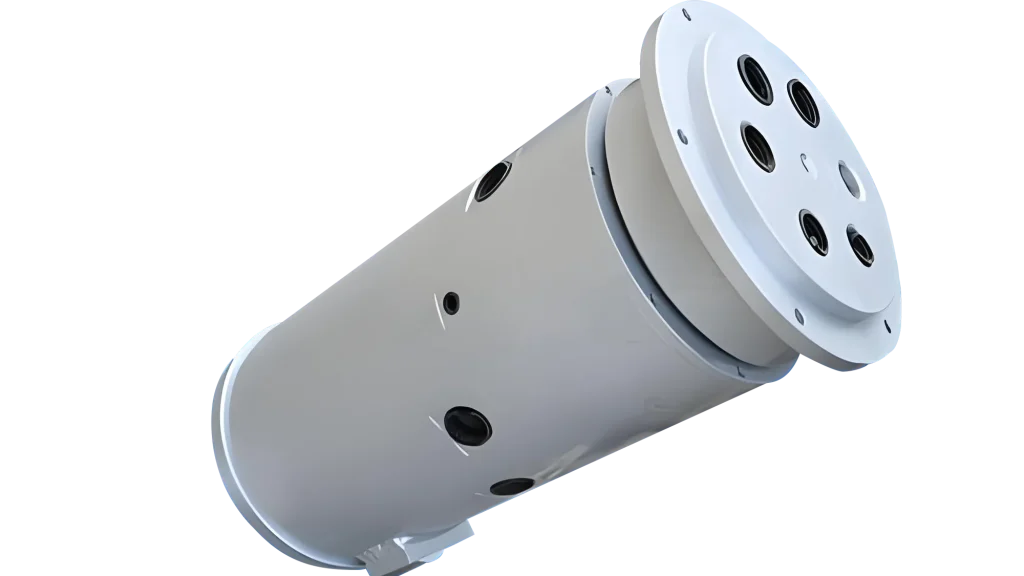
longitudinal cutting, transverse cutting, finishing, pickling, galvanizing, and color coating production lines. It is an indispensable and important transmission component. The quality of it will directly affect the normal operation of the entire production line. It has multiple channels and can operate as a single unit. Each channel has its own independent sealing system and is equipped with imported wear-resistant seals and bearings for support, resulting in small friction torque and flexible operation. The same medium should be used for each channel, but the pressure of each channel can be different.
Product Features:
1. Supported by two wide and accurate bearings, the operation is stable, and the bearings do not require maintenance for life;
2. Import specialized sealing components to ensure longevity and longevity;
3. The stainless steel shaft core has undergone special treatment to ensure sufficient wear resistance;
4. The shell can be made of aluminum alloy, stainless steel, or copper;
5. Unique drainage hole reflux design to prevent leakage to the external environment;
7. All technical indicators meet the standards of similar foreign products;
8. Able to tailor products to meet the needs of customers;
Technical parameters:
High speed: 400 r/min
Temperature range: -30~80 ℃
High pressure: 32Mpa
Working medium: Fluid media such as hydraulic oil and air
Note:
1. To avoid contamination caused by leakage, the same fluid can be used in both channels whenever possible.
2. It should be avoided to operate under conditions of high pressure fluctuations;
